
Quick Answer
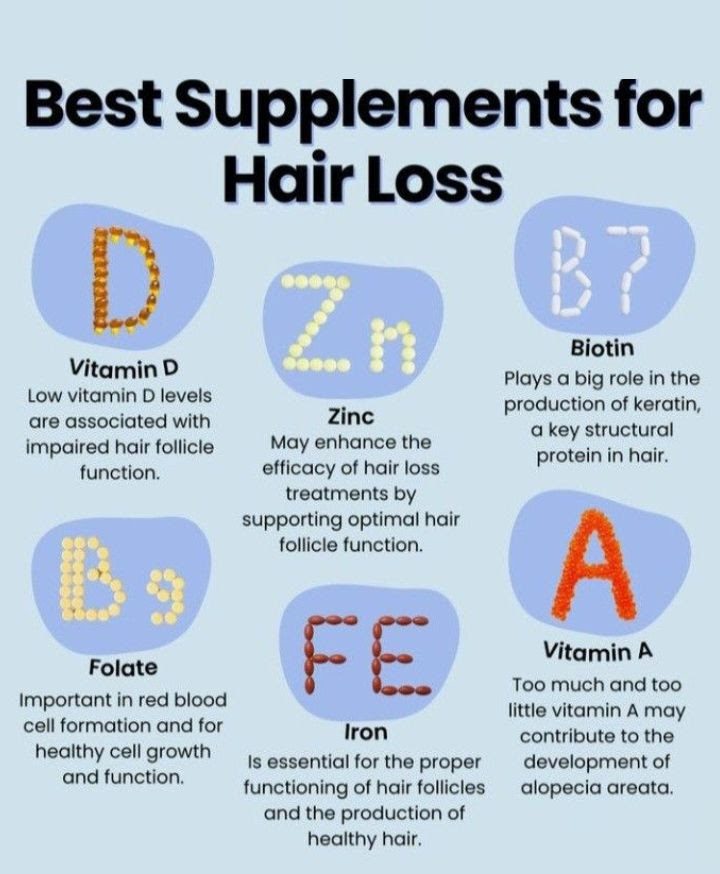
Hair loss caused by nutrient deficiencies occurs when the body lacks the essential building blocks required for hair follicle function. The most common deficiencies linked to hair loss include iron, vitamin D, zinc, and protein. Even when lab results fall within “normal” ranges, suboptimal levels can disrupt the hair growth cycle and lead to shedding or thinning.
Why Nutrients Are Critical for Hair Growth
The hair follicle is one of the most metabolically active structures in the body.
It requires:
Continuous cell division
Adequate oxygen supply
Stable energy production
Proper immune regulation
Because of this, the follicle is highly sensitive to nutritional status. When nutrients are insufficient, the body prioritizes vital organs over hair growth, shifting follicles into the resting phase.
This often presents clinically as Telogen Effluvium.
The Most Common Nutrient Deficiencies Linked to Hair Loss
1. Iron Deficiency (Low Ferritin)
Iron plays a critical role in:
Oxygen transport
DNA synthesis
Cellular energy production
Ferritin, the storage form of iron, is particularly important for hair growth.
Low ferritin levels:
Reduce oxygen delivery to the follicle
Impair matrix cell proliferation
Trigger early entry into the telogen phase
Even mild iron deficiency can lead to diffuse shedding and poor regrowth.
2. Vitamin D Deficiency
Vitamin D functions as a hormone that regulates:
Hair follicle cycling
Immune response
Keratinocyte differentiation
Low vitamin D levels are associated with:
Increased shedding
Delayed follicular recovery
Autoimmune-related hair conditions
3. Zinc Deficiency
Zinc is essential for:
Protein synthesis
Cell division
Tissue repair
In the hair follicle, zinc supports:
Structural integrity
Sebaceous gland function
Follicular recovery after stress
Deficiency can lead to:
Hair shedding
Brittle strands
Slower regrowth
4. Protein and Amino Acid Deficiency
Hair is primarily composed of keratin, a structural protein.
Insufficient protein intake:
Limits amino acid availability
Reduces keratin production
Weakens hair structure
This is commonly seen in:
Low-calorie diets
Rapid weight loss
Poor digestive absorption
5. B Vitamins (Especially B12 and Biotin)
B vitamins support:
Energy metabolism
Red blood cell formation
Nervous system function
Deficiencies can contribute to:
Fatigue
Reduced oxygen delivery
Hair thinning and shedding
While biotin deficiency is less common, it can still affect hair quality when present.
Why “Normal” Lab Results May Not Be Enough
In conventional medicine, lab ranges are designed to detect disease, not optimize function.
For hair growth:
Iron may be “normal” but not optimal
Vitamin D may be insufficient for follicular activity
Zinc levels may not reflect tissue availability
This is why individuals are often told they are “fine” while continuing to experience hair loss.
A functional approach focuses on optimal ranges, not just normal values.
Root Causes of Nutrient Deficiencies
Nutrient deficiencies are rarely caused by intake alone.
Common underlying contributors include:
1. Poor Absorption (Gut Dysfunction)
Inflammation in the gut
Reduced stomach acid
Microbial imbalance
These factors impair nutrient uptake even with a healthy diet.
2. Liver Dysfunction
The liver is essential for:
Nutrient storage
Activation of vitamins
Detoxification
When liver function is compromised, nutrient utilization decreases.
3. Chronic Inflammation
Inflammation:
Increases nutrient demand
Disrupts cellular function
Impairs follicular activity
4. Increased Physiological Demand
Certain conditions increase nutrient requirements:
Stress
Illness
Hormonal changes
Rapid weight loss
If intake does not match demand, deficiencies develop.
The Scalp and Nutrient Delivery
Even when nutrients are sufficient in the bloodstream, delivery to the follicle depends on:
Microcirculation
Oxygenation
Scalp health
Common barriers include:
Buildup and residue
Microbial imbalance
Biofilm-like layers
These factors reduce nutrient availability at the follicular level.
How to Restore Nutrient Balance for Hair Growth
1. Focus on Nutrient-Dense Foods
Include:
High-quality protein sources
Iron-rich foods
Leafy greens and mineral-rich vegetables
Healthy fats
2. Support Digestive Function
Improve absorption by addressing gut health and ensuring proper digestion.
3. Optimize Key Nutrient Levels
Assess and correct:
Ferritin
Vitamin D
Zinc
B vitamins
4. Reduce Inflammation
Address dietary and lifestyle factors contributing to chronic inflammation.
5. Improve Scalp Environment
Maintain proper scalp pH
Remove buildup
Enhance circulation and oxygen delivery
Can Hair Regrow After Nutrient Deficiency?
Yes. In most cases, hair regrowth is possible once deficiencies are corrected.
However, recovery depends on:
Duration of deficiency
Severity of imbalance
Overall metabolic and inflammatory state
Hair growth typically resumes once the follicle returns to the anagen phase.
Final Perspective
Hair loss due to nutrient deficiencies is one of the most common and most overlooked causes of hair shedding and thinning.
The hair follicle reflects internal nutritional status with high sensitivity. Even subtle deficiencies can disrupt the growth cycle.
Addressing nutrient balance is not simply about supplementation. It requires a comprehensive approach that includes absorption, metabolism, and overall internal health.
Frequently Asked Questions
What deficiency causes the most hair loss?
Iron deficiency (low ferritin) is one of the most common causes.
Can hair loss from deficiency be reversed?
Yes, in most cases, once nutrient levels are optimized.
How long does it take for hair to grow back?
Typically 3–6 months after correcting the deficiency, depending on individual factors.
References
Almohanna, H. M., et al. (2019). The role of vitamins and minerals in hair loss: A review. Dermatology and Therapy, 9(1), 51–70.
Guo, E. L., & Katta, R. (2017). Diet and hair loss: Effects of nutrient deficiency and supplement use. Dermatology Practical & Conceptual, 7(1), 1–10.
Rushton, D. H. (2002). Nutritional factors and hair loss. Clinical and Experimental Dermatology, 27(5), 396–404.
Trost, L. B., Bergfeld, W. F., & Calogeras, E. (2006). The diagnosis and treatment of iron deficiency and its potential relationship to hair loss. Journal of the American Academy of Dermatology, 54(5), 824–844.