
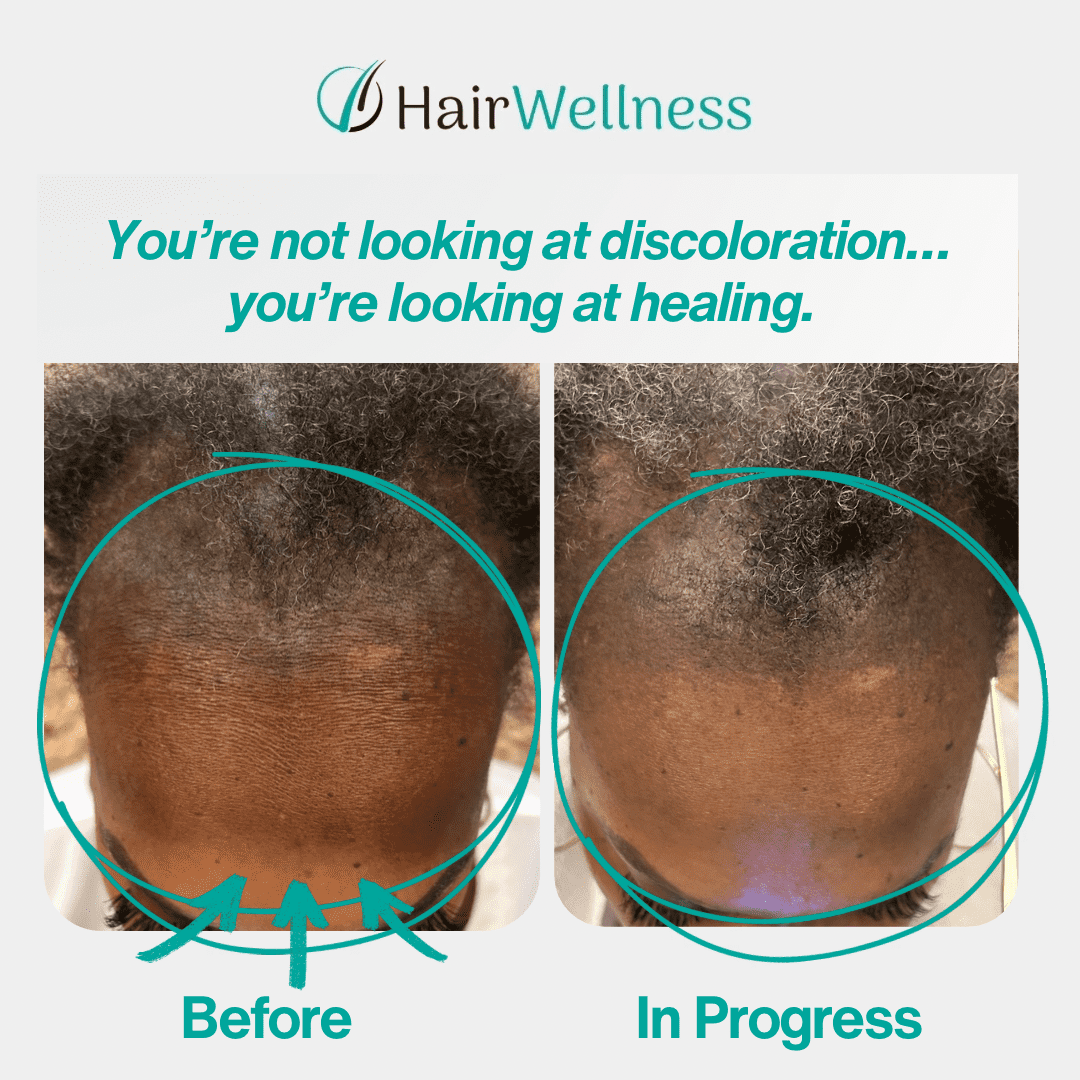
How Inflammation, Biofilm, and Microbial Imbalance Drive Pigment, and How It Can Reverse
Hyperpigmentation of the scalp is often misunderstood as a superficial or cosmetic concern. In reality, it is a biological signal of chronic inflammation, especially in conditions such as central centrifugal cicatricial alopecia (CCCA). When we begin to see changes in scalp color, we are not simply observing pigment, we are observing the activity of the immune system, the microbiome, and cellular signaling pathways within the skin.
In trichological practice, one of the most compelling observations is how quickly pigmentation can improve once the underlying inflammatory triggers are addressed. This article explains, from a scientific perspective, why hyperpigmentation develops in the first place and how targeted interventions can reverse it by restoring the scalp environment.
Understanding Hyperpigmentation as an Inflammatory Response
Hyperpigmentation in inflammatory scalp disorders is classified as post-inflammatory hyperpigmentation (PIH). It occurs when melanocytes, the pigment-producing cells in the epidermis, are stimulated by inflammatory signals to produce excess melanin.
During inflammation, immune cells release a cascade of mediators, including:
* Interleukin-1 (IL-1)
* Tumor necrosis factor-alpha (TNF-α)
* Interleukin-6 (IL-6)
* Prostaglandins and leukotrienes
* Reactive oxygen species (ROS)
These mediators influence keratinocytes, which in turn release signaling molecules such as:
* Alpha-melanocyte-stimulating hormone (α-MSH)
* Endothelin-1
* Stem cell factor (SCF)
Together, these signals activate melanocytes and increase the activity of tyrosinase, the rate-limiting enzyme responsible for melanin synthesis (Davis & Callender, 2010; Grimes, 2009).
The result is:
* Increased melanin production
* Enhanced transfer of pigment to surrounding keratinocytes
* Visible darkening of the scalp
The Role of Biofilm and Microbial Imbalance
While inflammation is the direct trigger for pigmentation, the persistence of inflammation is often driven by underlying microbial factors.
Organisms such as Malassezia species, commonly present on the scalp, can become pathogenic under certain conditions. These yeasts produce lipases and metabolites that irritate the skin and stimulate immune responses (Borda & Wikramanayake, 2015).
More importantly, many microorganisms exist within biofilms, structured microbial communities encased in a protective extracellular matrix. Biofilms:
* Shield microbes from immune clearance
* Increase resistance to topical treatments
* Maintain continuous activation of the immune system
This leads to sustained activation of pathways such as Toll-like receptors (TLRs) and NF-κB signaling, which drive chronic cytokine release (Donlan, 2002).
In this environment, the scalp remains in a pro-inflammatory state, continuously signaling melanocytes to produce pigment.
Why Pigmentation Can Appear After Years of CCCA
CCCA is a chronic condition characterized by lymphocytic inflammation and progressive follicular damage (Aguh & Okoye, 2016). However, hyperpigmentation does not always appear at the onset of the disease.
Instead, it often develops when:
* Inflammation intensifies or becomes more persistent
* The scalp barrier becomes compromised
* Microbial imbalance or biofilm accumulation increases
This creates a threshold effect, where melanocyte stimulation becomes sufficient to produce visible pigment over time.
Interrupting the Inflammatory Pigment Cycle
Effective treatment does not target pigment directly. Instead, it focuses on removing the triggers that sustain inflammation.
When interventions successfully:
* Disrupt biofilm
* Reduce fungal and microbial load
* Restore scalp pH and barrier function
* Decrease inflammatory signaling
the biological environment of the scalp changes significantly.
At the cellular level, this leads to:
* Reduced activation of TLRs
* Downregulation of NF-κB signaling
* Decreased cytokine release (IL-1, TNF-α)
* Lower levels of α-MSH, endothelin-1, and SCF
As a result, melanocytes receive fewer stimulatory signals and begin to return to a baseline, quiescent state.
Why Hyperpigmentation Improves Relatively Quickly
A common clinical question is how pigmentation that developed over several months can improve in a much shorter timeframe.
The explanation lies in two key processes:
1. Rapid cessation of pigment production
Once inflammation is controlled, melanocytes quickly reduce melanin synthesis because the signaling pathways driving production are no longer active.
2. Natural skin turnover
The epidermis undergoes continuous renewal, typically every 28 days. As new keratinocytes replace older ones, pigmented cells are gradually shed. Additionally, dermal macrophages help clear residual pigment in deeper layers (Pandya et al., 2006).
This combination allows for visible improvement in skin tone within weeks, provided that the inflammatory trigger has been effectively addressed.
Clinical Implications
The resolution of hyperpigmentation is not merely a cosmetic improvement. It is a biomarker of reduced inflammation and improved scalp health.
In conditions like CCCA, where chronic inflammation can lead to permanent follicular damage, early identification and treatment of inflammatory triggers are critical. Addressing:
* Microbial imbalance
* Biofilm presence
* Barrier dysfunction
can shift the scalp from a damaging environment to a regenerative one.
Conclusion
Scalp hyperpigmentation in inflammatory hair loss conditions is the result of a complex interaction between the immune system, microbial environment, and melanocyte activity. It reflects not just pigment changes, but underlying biological processes that influence disease progression.
By targeting the root causes, particularly biofilm and microbial-driven inflammation, it is possible to interrupt the signaling pathways that drive excess pigment production. When this happens, melanocytes return to normal function, and the skin gradually restores its natural tone.
This approach highlights a fundamental principle in trichology and functional medicine:
Restoring balance within the scalp environment is the foundation for both skin normalization and hair recovery.
References (APA Style)
Aguh, C., & Okoye, G. A. (2016). Central centrifugal cicatricial alopecia. Journal of the American Academy of Dermatology, 75(6), 1087–1096.
Borda, L. J., & Wikramanayake, T. C. (2015). Seborrheic dermatitis and dandruff: A comprehensive review. Journal of Clinical and Investigative Dermatology, 3(2).
Davis, E. C., & Callender, V. D. (2010). Postinflammatory hyperpigmentation: A review of the epidemiology, clinical features, and treatment options in skin of color. Journal of Clinical and Aesthetic Dermatology, 3(7), 20–31.
Donlan, R. M. (2002). Biofilms: Microbial life on surfaces. Emerging Infectious Diseases, 8(9), 881–890.
Grimes, P. E. (2009). Management of hyperpigmentation in darker racial ethnic groups. Seminars in Cutaneous Medicine and Surgery, 28(2), 77–85.
Pandya, A. G., Guevara, I. L., & Grimes, P. E. (2006). Post-inflammatory hyperpigmentation: A review. American Journal of Clinical Dermatology, 7(6), 343–356.
Taylor, S. C., Cook-Bolden, F., Rahman, Z., & Strachan, D. (2009). Acne vulgaris in skin of color. Journal of the American Academy of Dermatology, 60(5), S98–S109.