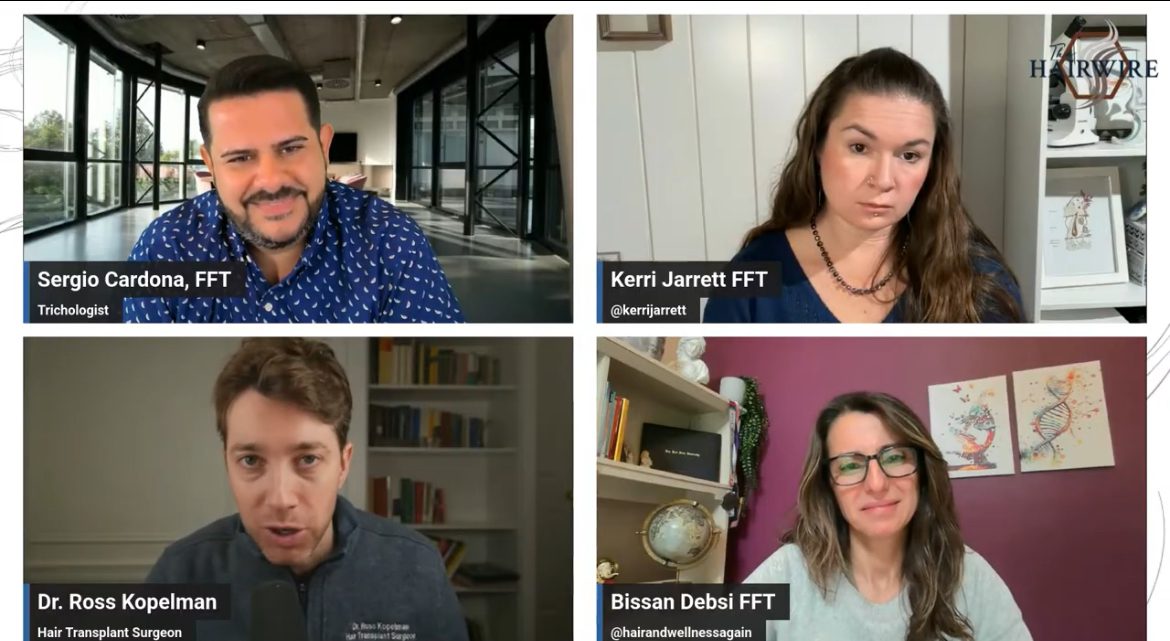
At The HairWire, our YouTube channel, myself, and my colleagues had the privilege of interviewing Dr. Ross Kapleman, a respected hair transplant surgeon with deep experience in male and female pattern hair loss. Our discussion highlighted a growing and essential theme in the hair restoration field: the need to bridge medical interventions with functional and holistic approaches to achieve long-term success.
This conversation represents the future of our industry. More practitioners now recognize that sustainable hair regrowth requires addressing both internal root causes and external clinical treatments, not relying on any single modality.
Why Medical and Holistic Approaches Must Work Together
While hair transplant surgery remains an effective option for advanced androgenetic alopecia, Dr. Kapleman emphasized that surgical results depend on foundational factors:
Scalp inflammation
Hormonal balance
Metabolic and nutritional stability
Immune activity
Microbiome health
Genetic expression
These are the core areas functional trichology investigates and corrects.
I shared how hair loss is deeply connected to internal health, gut dysfunction, oxidative stress, hormone fluctuations, and nutrient depletion all influence follicle behavior.
Together we agreed:
The most successful outcomes occur when medicine and functional trichology partner, not compete.
Understanding Pharmaceuticals: Benefits and Limitations
We reviewed commonly used oral medications in hair loss treatment:
Oral Minoxidil
Effective for density improvement but may cause systemic side effects such as fluid retention, blood pressure changes, and an initial shedding phase.
Dutasteride & Finasteride
Valuable for DHT-driven hair loss but require awareness of hormonal and psychological side effects.
Spironolactone
Helpful for hormonally driven female hair loss, yet may influence electrolytes, menstrual cycles, and overall energy.
These medications can be beneficial, but they work best when combined with an internal balancing strategy to support long-term follicle health.
Trichoscopy vs. Biopsy: A Modern Diagnostic Approach
We both emphasized the value of trichoscopy as a first-line diagnostic tool.
High-resolution scalp imaging allows clinicians to identify:
Miniaturization patterns
Scalp inflammation
Scarring vs. non-scarring alopecia
Perifollicular scaling
Biofilm presence
This avoids unnecessary biopsies and ensures accurate, patient-centered diagnosis.
The Future of Hair Restoration: Collaboration
Dr. Kapleman highlighted the importance of having a trained trichologist as part of the surgical team. The trichologist plays a pivotal role in:
Preparing the scalp before surgery
Improving inflammation and microbiome health
Supporting gut and hormonal balance
Ensuring proper detoxification and nutrient levels
Enhancing graft success and long-term retention
This collaborative model is where the industry is heading—and where clients see the strongest outcomes.
Why This Matters
Our interview reinforced one essential message:
Hair loss is multifactorial, and treatment must be multidisciplinary.
Medical interventions can be transformative.
Functional medicine stabilizes the internal environment.
Regenerative therapies enhance follicular recovery.
Together, they provide a truly comprehensive care model.
Final Thoughts
I am grateful for Dr. Kapleman’s openness, expertise, and willingness to bridge the gap between medical and holistic frameworks. This discussion represents the type of collaboration that will elevate the standards of hair restoration care.
Stay connected with The HairWire for more expert interviews, clinical insights, and educational content designed to support practitioners and individuals seeking evidence-based hair loss solutions.