
Quick Answer
Hormonal hair loss in women is most commonly related to increased sensitivity of the hair follicle to androgens, rather than simply “high hormone levels.” This process leads to gradual follicle miniaturization, known clinically as Androgenetic Alopecia. Internal factors such as insulin resistance, inflammation, and liver function play a critical role in how these hormonal signals affect the hair follicle.
What Is Hormonal Hair Loss in Women?
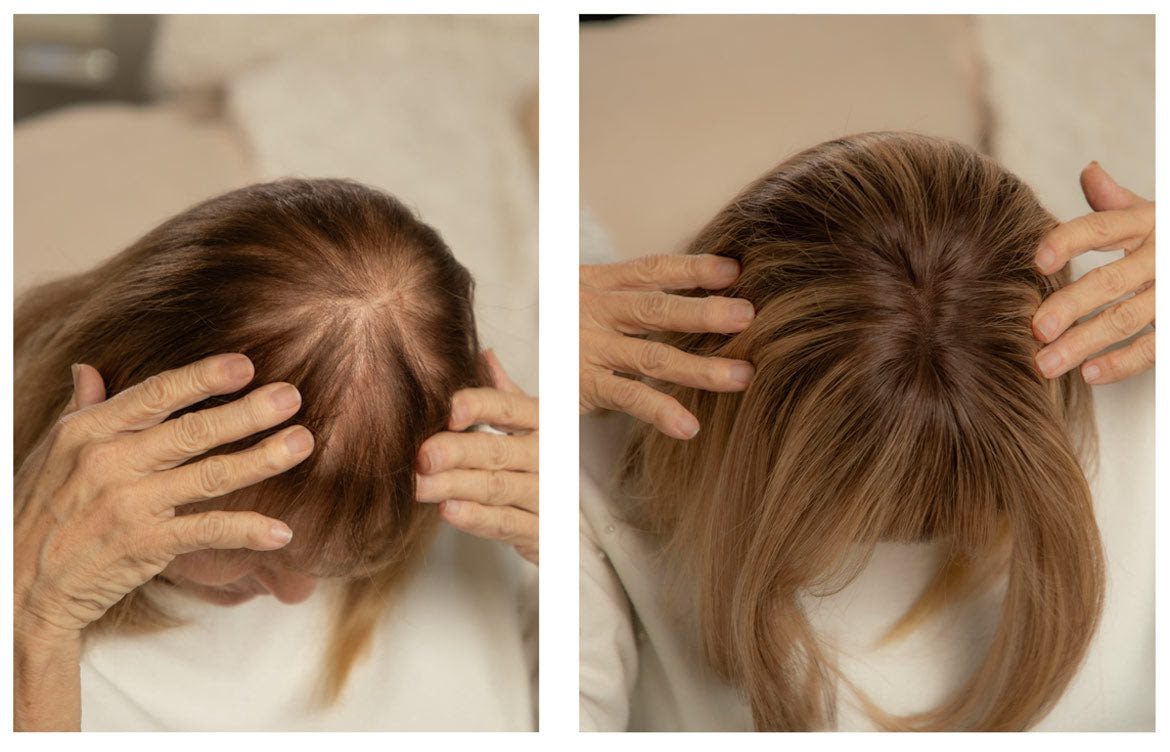
Hormonal hair loss is a progressive condition characterized by:
Gradual thinning rather than sudden shedding
Widening of the part
Reduced hair density at the crown
Finer, weaker hair strands over time
Unlike acute shedding conditions, this process reflects altered follicular signaling, not follicle loss.
The Biology of Female Pattern Hair Loss
Hair follicles are hormonally responsive structures. In susceptible individuals, androgens—particularly dihydrotestosterone (DHT)—affect the follicle by:
Shortening the anagen (growth) phase
Prolonging the telogen (resting) phase
Causing progressive follicular miniaturization
Over time, terminal hairs become thinner, shorter, and less pigmented.
Why Hormones Are Not the Full Story
A common misconception is that hormonal hair loss is caused by “high testosterone.”
In reality, most women with androgenetic alopecia have normal circulating hormone levels.
The key factor is:
Follicular Sensitivity to Hormones
This sensitivity is influenced by:
Genetic predisposition
Inflammatory signaling
Metabolic health
Local scalp environment
This is where a functional approach becomes essential.
Key Internal Drivers of Hormonal Hair Loss
1. Insulin Resistance and Blood Sugar Dysregulation
Insulin plays a central role in hormonal balance.
Elevated insulin levels:
Increase androgen production
Reduce sex hormone-binding globulin (SHBG)
Increase free androgens available to the follicle
This amplifies androgen signaling at the scalp.
2. Chronic Inflammation
Inflammation alters follicular signaling through cytokines such as:
TNF-alpha
IL-1
IL-6
These mediators:
Disrupt the hair growth cycle
Promote premature follicular regression
Exacerbate androgen sensitivity
3. Liver Function and Hormone Metabolism
The liver regulates the breakdown and clearance of hormones.
When liver function is impaired:
Estrogen metabolism becomes inefficient
Hormonal balance shifts
Inflammatory load increases
This creates a systemic environment that promotes hair thinning.
4. Cortisol and Chronic Stress
Chronic stress elevates cortisol, which:
Disrupts the hair cycle
Increases inflammation
Impairs thyroid and reproductive hormone balance
Cortisol also affects blood flow and nutrient delivery to the follicle.
5. Thyroid Function
Even subtle thyroid dysfunction can affect:
Hair growth rate
Hair texture
Follicular turnover
Low thyroid activity is often associated with diffuse thinning and reduced hair quality.
Hormonal Hair Loss Across Life Stages
Perimenopause and Menopause
Declining estrogen levels reduce the protective effect against androgens.
This results in:
Increased relative androgen influence
Accelerated follicular miniaturization
Noticeable thinning at the crown
Postpartum Period
After pregnancy, estrogen levels drop rapidly, often triggering shedding. In some cases, this can reveal underlying androgen sensitivity.
Polycystic Ovary Syndrome (PCOS)
Women with Polycystic Ovary Syndrome often experience:
Elevated androgens
Insulin resistance
Chronic inflammation
These factors collectively increase the risk of hair thinning.
The Role of the Scalp Environment
Hormonal signaling alone does not determine outcomes. The scalp environment significantly influences follicular response.
Common findings include:
Microinflammation
Seborrheic dermatitis
Biofilm-like buildup
These conditions:
Increase local androgen activity
Impair oxygen and nutrient delivery
Limit treatment effectiveness
Addressing the scalp is essential for improving results.
How Is Hormonal Hair Loss Different from Shedding?
| Feature | Hormonal Hair Loss | Telogen Effluvium |
|---|---|---|
| Onset | Gradual | Sudden |
| Pattern | Crown thinning, widening part | Diffuse shedding |
| Hair type | Miniaturized, finer strands | Full-length shedding |
| Duration | Progressive | Temporary |
Understanding this distinction is critical for proper intervention.
Functional Approach to Supporting Hormonal Hair Loss
1. Stabilize Blood Sugar
Balanced meals help regulate insulin and reduce androgen stimulation.
2. Reduce Inflammation
Incorporate anti-inflammatory foods and address gut health.
3. Support Liver Detoxification
Promote efficient hormone metabolism through nutrition and lifestyle.
4. Optimize Nutrient Status
Focus on:
Iron
Zinc
Vitamin D
Protein intake
5. Address the Scalp Environment
Restore pH balance
Remove buildup and biofilm
Improve circulation and oxygenation
Can Hormonal Hair Loss Be Reversed?
Early-stage hormonal hair loss can be significantly improved when:
Internal imbalances are corrected
Inflammation is reduced
Follicular environment is optimized
However, advanced miniaturization may require more intensive intervention to restore density.
Final Perspective
Hormonal hair loss in women is not simply a hormonal issue. It is a multifactorial condition involving metabolic, inflammatory, and environmental influences on the hair follicle.
Understanding these interactions allows for a more precise and effective approach to treatment, focusing not only on hormones but on the entire internal ecosystem that regulates hair growth.
Frequently Asked Questions
Can hormonal hair loss happen with normal hormone levels?
Yes. The issue is often follicular sensitivity, not absolute hormone levels.
Is hormonal hair loss permanent?
It can be progressive, but early intervention can slow or improve the condition.
What is the first sign of hormonal hair loss?
A widening part and gradual thinning at the crown.
References
Randall, V. A. (2008). Androgens and hair growth. Dermatologic Therapy, 21(5), 314–328.
Sinclair, R. (2015). Female pattern hair loss: A pilot study investigating combination therapy. International Journal of Dermatology, 54(6), 686–690.
Goodarzi, M. O., et al. (2011). Polycystic ovary syndrome: Etiology, pathogenesis and diagnosis. Nature Reviews Endocrinology, 7(4), 219–231.
Trüeb, R. M. (2009). Oxidative stress in ageing of hair. International Journal of Trichology, 1(1), 6–14.