
Introduction
Many people starting medications such as Ozempic, Wegovy, or other GLP-1 receptor agonists begin searching the same question online: “Does Ozempic cause hair loss?”
These medications are increasingly used to manage type 2 diabetes and support weight loss. As their use has expanded, more individuals have reported noticing hair shedding several months after starting treatment.
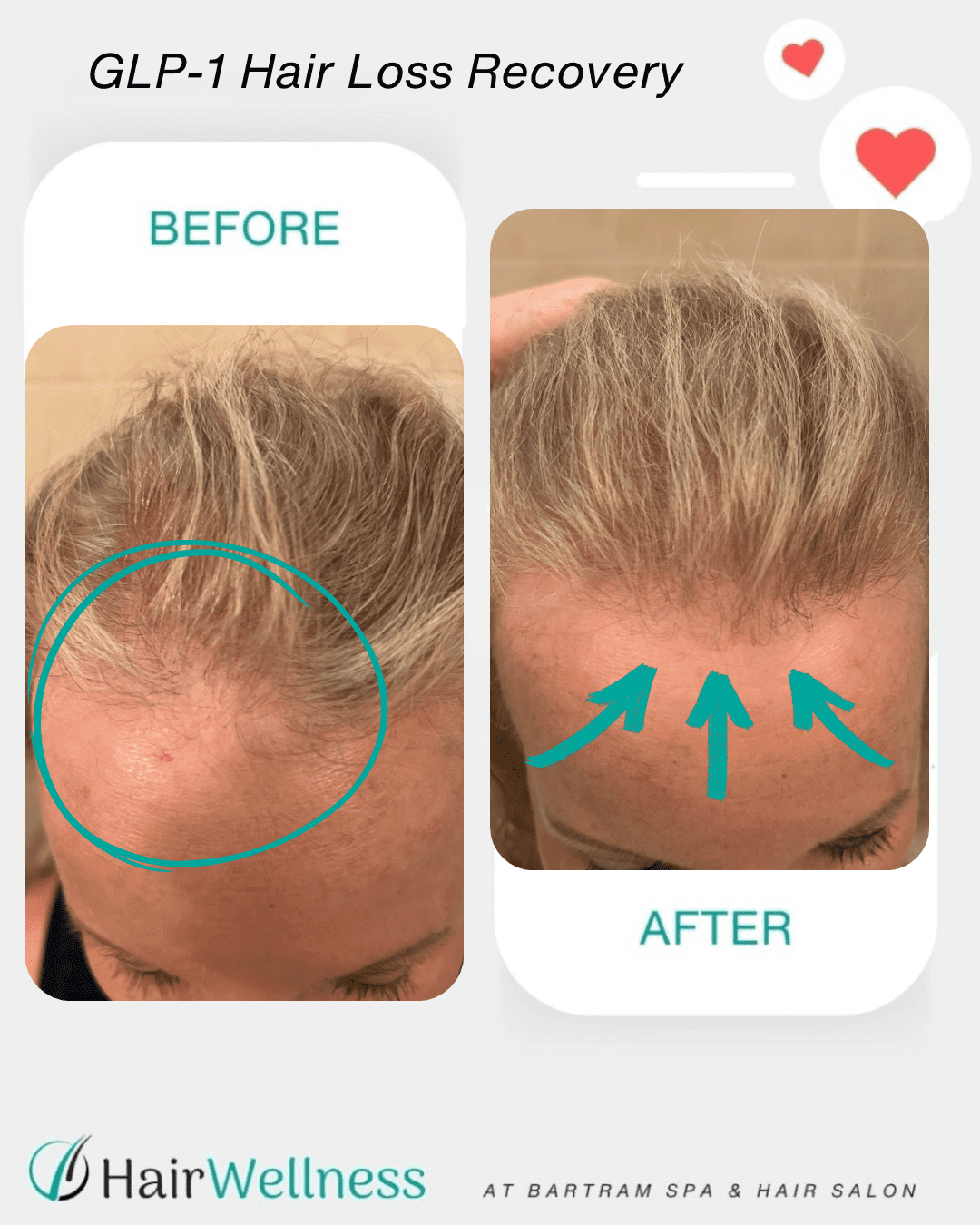
Hair loss is not considered a direct pharmacological side effect of Ozempic. However, several biological factors associated with GLP-1 medications can contribute to hair shedding or temporary hair loss. Understanding these mechanisms helps explain why some individuals experience hair thinning while using these medications.
What Is Ozempic and How Does It Work?
Ozempic (semaglutide) belongs to a class of medications known as GLP-1 receptor agonists. These drugs mimic a hormone called glucagon-like peptide-1, which helps regulate blood sugar and appetite.
GLP-1 medications work by:
increasing insulin release
slowing stomach emptying
reducing appetite
improving blood sugar regulation
These effects often lead to significant weight loss, which is why the medications are also prescribed for obesity management (Wilding et al., 2021).
While these metabolic changes can improve overall health, they may also influence the hair growth cycle.
Why Hair Loss Can Occur After Starting Ozempic
Most hair shedding reported during GLP-1 treatment is related to telogen effluvium, a temporary condition where more hair follicles shift into the resting phase of the growth cycle.
Several factors associated with GLP-1 therapy may contribute to this process.
Rapid Weight Loss
Rapid weight reduction is one of the most common triggers of telogen effluvium. When the body experiences sudden metabolic change, it may redirect energy toward essential functions rather than hair growth.
This can cause a larger percentage of follicles to enter the resting phase, leading to increased hair shedding two to three months later (Headington, 1993).
Reduced Nutrient Intake
Because GLP-1 medications suppress appetite, some individuals consume fewer calories and less protein than the body requires for normal hair production.
Hair follicles depend on nutrients such as:
protein
iron
zinc
vitamin D
B vitamins
Inadequate intake of these nutrients can contribute to hair thinning or hair shedding over time.
Metabolic and Hormonal Adjustments
Weight loss and changes in blood sugar regulation can alter hormonal and metabolic signals that influence the hair cycle.
Hair follicles are sensitive to these signals, particularly when multiple factors occur simultaneously, such as:
caloric restriction
rapid weight loss
nutrient imbalance
systemic stress
Why Hair Shedding Often Appears Months Later
Many people are confused because hair shedding does not begin immediately after starting Ozempic.
Telogen effluvium usually appears two to three months after the triggering event. This delay occurs because affected hairs must complete the shortened growth phase before shedding becomes visible.
For example, someone who begins a GLP-1 medication in January may notice increased shedding in March or April.
A Functional Medicine Perspective
From a holistic functional medicine perspective, medications like Ozempic are not viewed in isolation. Instead, the focus is on maintaining the internal balance necessary for healthy hair growth.
Individuals who choose to use GLP-1 medications can often protect their hair by addressing key internal factors, including:
adequate protein intake
balanced micronutrient levels
metabolic stability
reduced inflammatory stress
Hair follicles are highly responsive to the body’s internal environment. Supporting that environment can help maintain normal follicle activity even during metabolic changes.
Supporting Hair Health While Using GLP-1 Medications
People who are taking Ozempic or similar medications can take several steps to reduce the risk of excessive hair shedding.
Maintain adequate protein intake
Hair shafts are composed primarily of keratin protein. Consuming sufficient protein helps maintain follicle function.
Monitor key nutrients
Iron, vitamin D, zinc, and B-vitamins are essential for hair growth and should remain within optimal ranges.
Support metabolic balance
Stable blood sugar and balanced meals help reduce physiological stress on the body.
Maintain scalp health
Treatments that stimulate circulation and maintain the scalp environment, such as microneedling, low-level laser therapy, or ozone therapy, may support follicle activity.
Avoid rapid weight loss
Gradual weight reduction is less likely to trigger telogen effluvium than rapid changes in body weight.
Conclusion
Many people search the question “Does Ozempic cause hair loss?” after noticing increased shedding during treatment. Current evidence suggests that most cases of hair loss associated with GLP-1 medications are related to rapid weight loss, nutritional changes, and metabolic stress, rather than a direct drug effect.
Hair shedding in these situations is usually temporary. By supporting nutrition, metabolic balance, and scalp health, individuals can help maintain healthy hair growth while benefiting from the metabolic improvements these medications provide.
References
Headington, J. T. (1993). Telogen effluvium: New concepts and review. Archives of Dermatology, 129(3), 356–363. https://doi.org/10.1001/archderm.1993.01680240094012
Wilding, J. P. H., Batterham, R. L., Calanna, S., Davies, M., Van Gaal, L., Lingvay, I., et al. (2021). Once-weekly semaglutide in adults with overweight or obesity. New England Journal of Medicine, 384(11), 989–1002. https://doi.org/10.1056/NEJMoa2032183